
Who Says All Koalas look Alike? Not using Drones for Data Collection and AI they Don’t
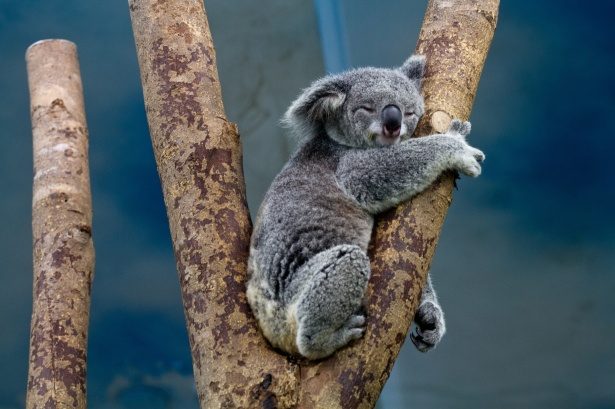
The data collection is something that we are used to seeing with drones, but the combination of AI is interesting in this application. Interpreting the data manually is tedious and time-consuming, as well as error prone. A commercial application such as reviewing aerial photography from a drone for a long pipeline inspection is very analogous, or even CCTV camera’s looking for bad guys: looking at large amounts of video data is difficult, boring, and prone to errors.
It seems, however, that koalas have individual heat signatures. That allows scientists to identify individual animals with some confidence.
Again from the piece:
“Automated detection of individual animals in remotely sensed imagery can reduce bias and increase accuracy and precision of wildlife surveys, but few methods have been developed and tested in the field. For mammals, the automated detection methods shown to be most accurate thus far have been applied to thermal imagery, as the large temperature gradient between mammals and their background environment allows computer vision to easily detect and count their thermal signatures.
The monitoring and management of koalas (Phascolarctus cinereus), an Australian mammal species of conservation concern, has the potential to benefit greatly from development of a robust automated detection method using RPAS and thermal imagery18,19. Koala populations are often widely and unevenly distributed and frequently occur on private property, making them difficult and time-consuming to survey accurately by direct observation18,20. They are also cryptic in nature and inhabit environments with complex canopy cover, which significantly lowers the probability of detecting all individuals through direct observation both on the ground and in colour photographic imaging.
Candidate ‘koala’ signatures were then detected from the averaged heat map as shown in Fig. 2.”
####post_link##